

Ballet Lighting Before the Age of Electricity
Light as the Magic of Theatre
Ballet and opera could not exist without light. Lighting determined not only what the audience would see, but also the atmosphere, the colors of the costumes, and the overall experience. Today we are accustomed to perfectly illuminated stages with modern spotlights, but in the 19th century the situation was entirely different. Light then had a special warm glow, smelled of wax or smoke – and at the same time posed a constant danger.
The Era of Candles – Smoke, Heat, and Fire Risk
Until the end of the 18th century, theatres were lit mainly by wax candles. In large halls, hundreds burned, sometimes more than a thousand.
The problems were obvious: smoke rising to the ceiling and soiling decorations, dripping wax staining the floor, unbearable heat, and the constant risk of fire. The atmosphere was heavy; the audience grew accustomed, but for ballerinas in heavy costumes it must have felt like torment.
Oil Lamps – The First Step Toward Modernization
At the turn of the 18th and 19th centuries, oil lamps began to be used. The light was stronger and more stable, but the oily smoke made the air quality even worse. They were often combined with candles, so the air in theatres was still almost unbreathable.
Gas Lighting – Revolution and Threat
From the 1820s, gas lamps spread through Paris, reaching theatres around 1820–1830. At the Salle Le Peletier, where the Paris Opera was based, an entire network of pipes supplied both footlights and rows of lamps.
Audiences were thrilled: the light was brighter, more even, and could be regulated. Yet the heat in the hall was suffocating, ballerinas fainted in their heavy dresses, and the risk of fire multiplied. In fact, a faulty gas installation caused the devastating fire of 1873, which consumed the entire building in just 27 hours.
The Atmosphere of Gaslight and Backstage Reality
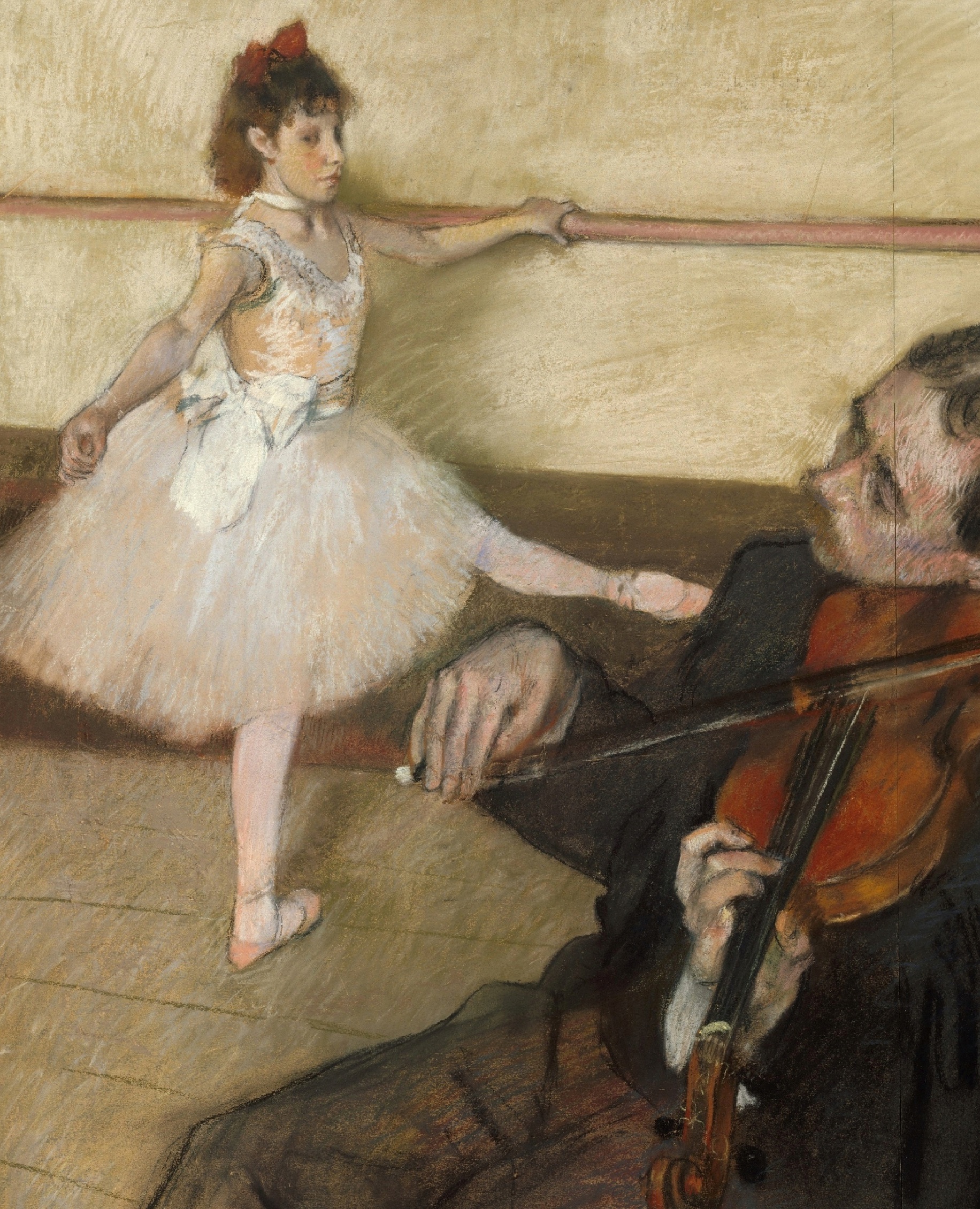
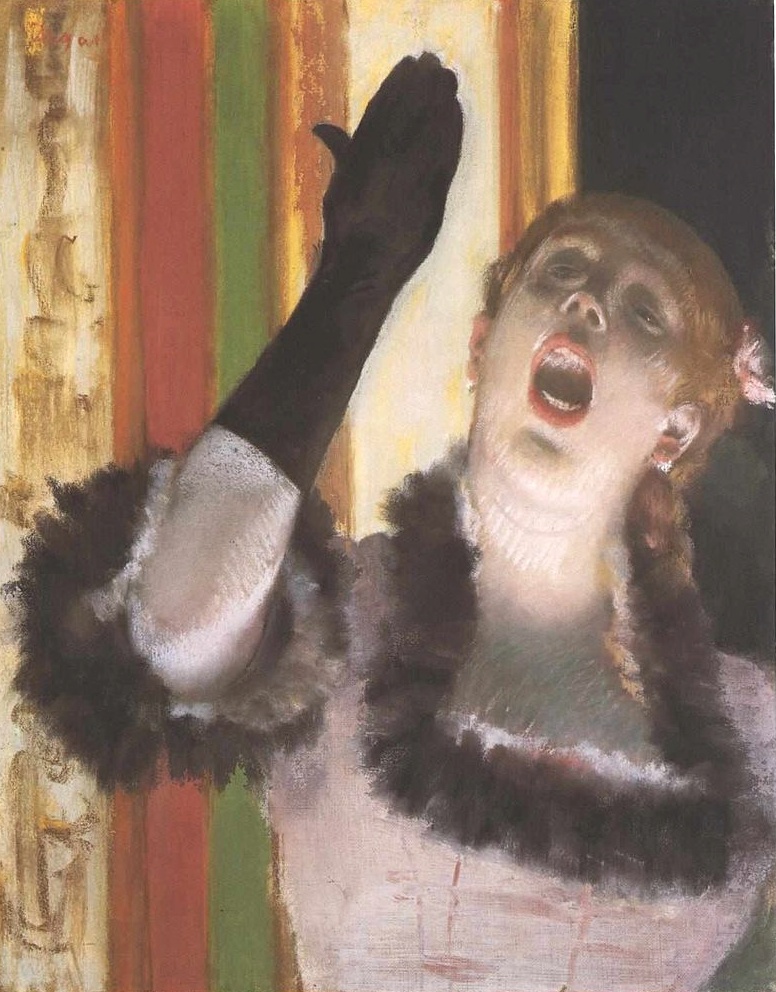
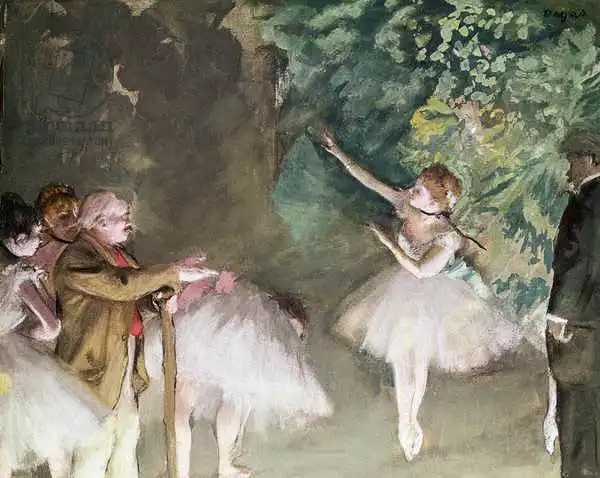
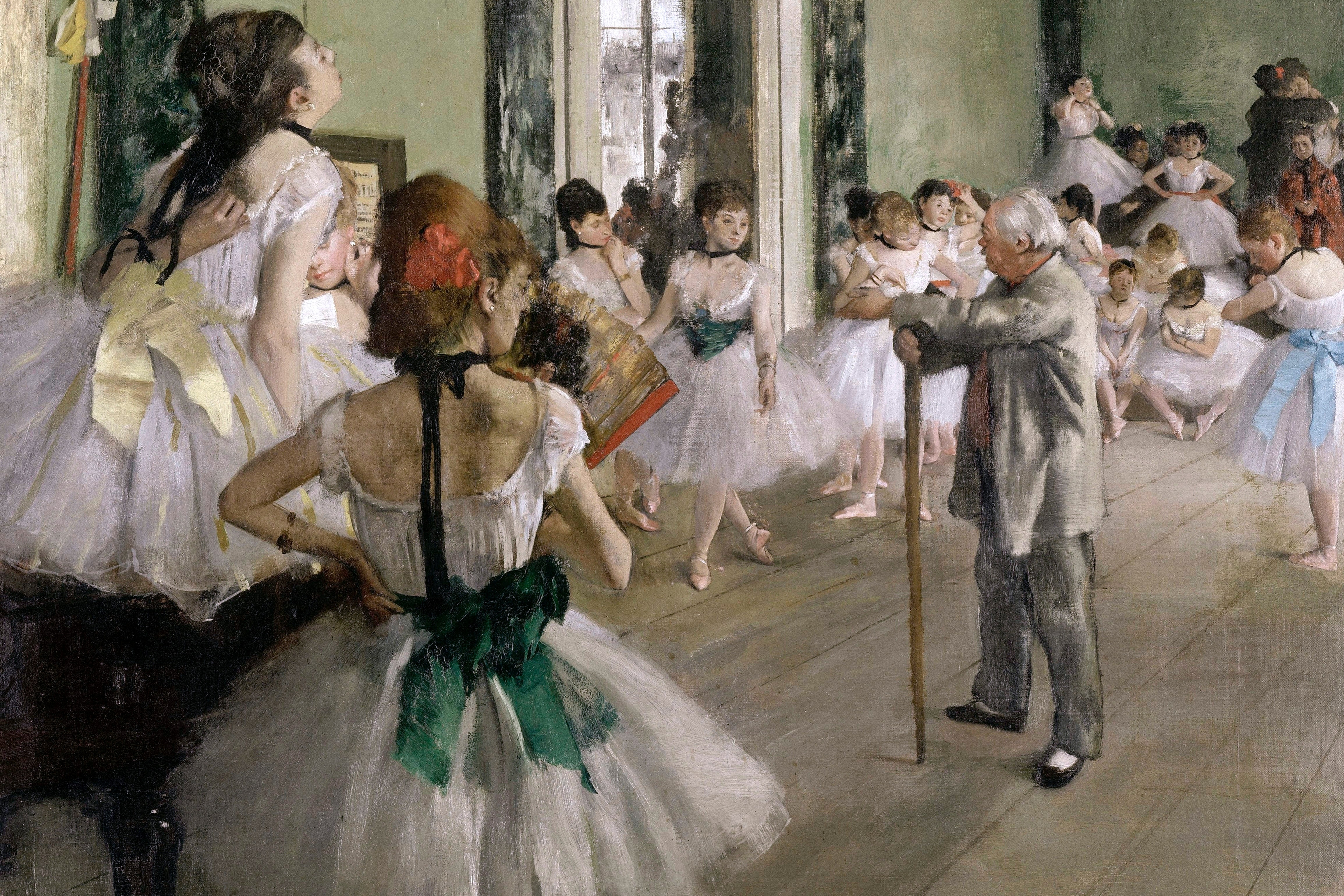
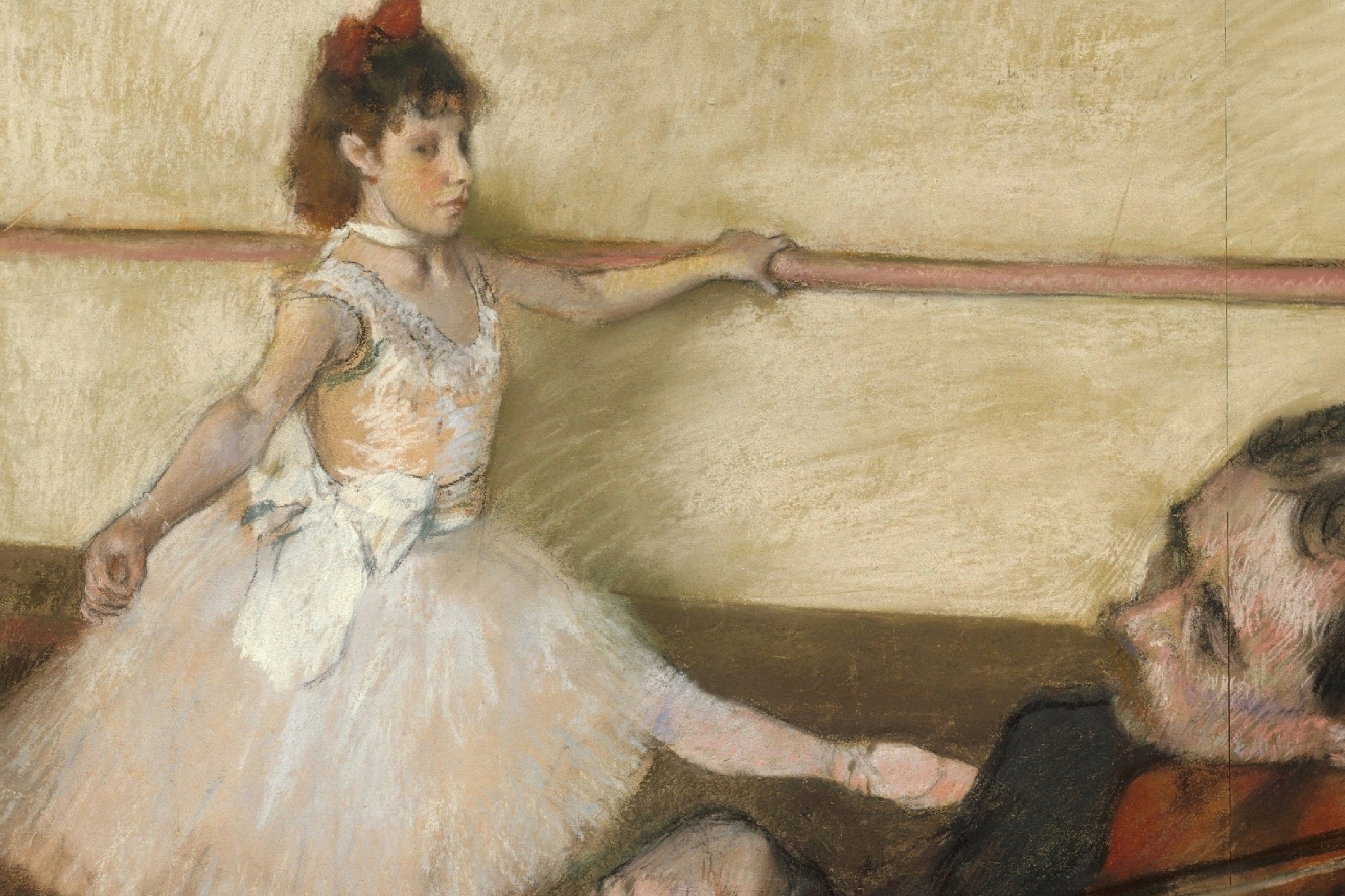
Gaslight gave the stage an unforgettable atmosphere. The white tulle skirts of the ballerinas literally glowed in the warm yellow-orange tones, while their faces appeared harsher and more fatigued. Footlights placed along the edge of the stage cast sharp beams of light upward, creating unnatural shadows that accentuated noses, chins, and eye sockets. What was meant to add glamour often exposed the dancers in their raw reality.
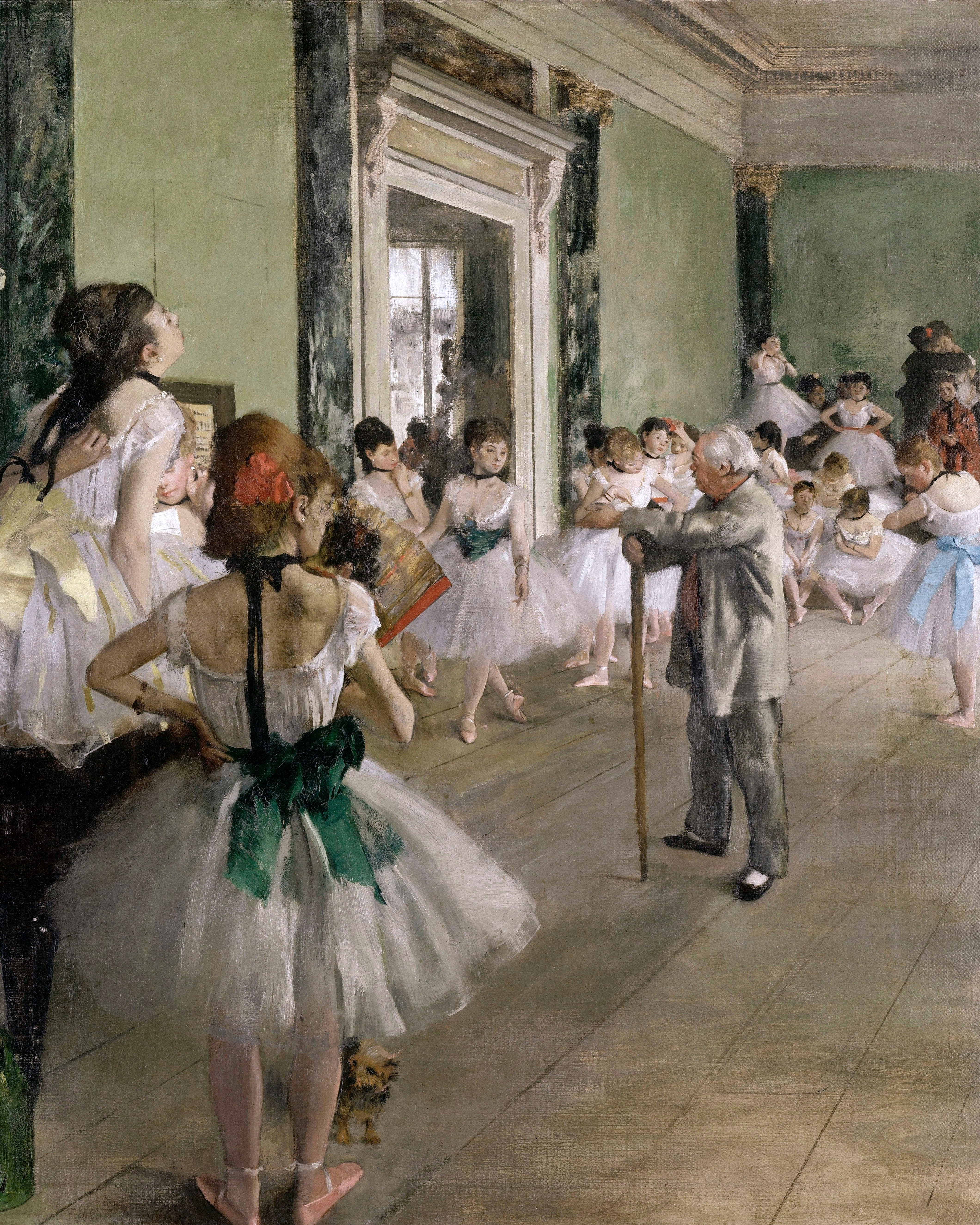
Degas, however, never sought to deceive the viewer or to idealize. He was fascinated by how light truly fell upon the stage, and he focused on capturing this unusual effect with precision. The light revealed details that might not have flattered the dancers, but this was precisely what made his paintings more truthful and emotional. Degas portrayed ballet not only as a dreamlike world but also as a place where beauty and harsh reality existed side by side.
Backstage under gaslight was also full of stories:
- wealthy patrons used the dim glow of lamps for discreet meetings with young dancers,
- actresses complained that the light emphasized sweat and wrinkles, making them appear less charming on stage,
- and some spectators claimed that under gas lamps the ballerinas looked “too real” – the romantic haze of candlelight had vanished, along with part of the magic.
Electric Light – The End of an Era
Around 1880–1890, electricity came to the theatres. For the first time it was possible to safely regulate the intensity of light and even use colored filters. The stage appeared brighter and more contrasted, but the “smoky romanticism” was lost.
For Degas, this marked the end of the intimate atmosphere he loved so much. He therefore relied on memory and sketches created during the era of the Salle Le Peletier, when the light still carried its peculiar smoky glow.
Curiosities
In the 19th century, more than 200 theatres in Europe burned down – most often because of candles or gas.
Ballerinas often trained by candlelight even outside rehearsals – wax sometimes dripped directly onto their pointe shoes.
Some of Degas’s drawings and pastels still bear traces of the smoky, yellow-orange atmosphere of that light.
After the introduction of electricity, part of the audience complained that the stage looked “too sharp” and lacked the dreamy haze of the past.
Legacy
Today it seems natural to us that the stage is illuminated by perfectly pure white light, which can be freely adjusted and shaped by modern spotlights. The theatre appears polished, precise, and technically flawless. But in the 19th century, the atmosphere was entirely different. The ballerinas on stage did not stand in the glow of immaculate beams of light, but in the yellow-orange haze of gas lamps, whose light was heavy, uneven, and often cruelly revealing.
In that light the dancers appeared more raw – faces lit harshly from below cast unusual shadows, sweat glistened, and small imperfections came to the fore. What modern lighting can conceal or soften remained mercilessly visible then. And it was precisely this “imperfection” that fascinated Degas. Instead of painting an illusion of perfection, he depicted the ballerinas as a real spectator might have seen them – tired, sweating, nervous, yet beautiful in their humanity.
This world disappeared with the arrival of electricity. With it came brightness, contrast, and technical safety, but also the loss of that dreamy haze that once enveloped the stage. Degas was thus the last great chronicler of an era when smoke, heat, and the glow of candles or gaslights created an atmosphere that can never be repeated.
The legacy of his paintings is therefore not only artistic, but also historical. Thanks to him, we can glimpse an environment that no longer exists – a world where dance was not only an aesthetic spectacle, but also a struggle with the environment, with the light, and with the body itself. Degas left us a memory of this unique age, one that combines poetry with harsh reality. And it is precisely for this reason that his works have not lost their power even more than a century later.
Most Popular Articles
Most Popular Articles