

THE PATH TO BALLET PHOTOGRAPHY
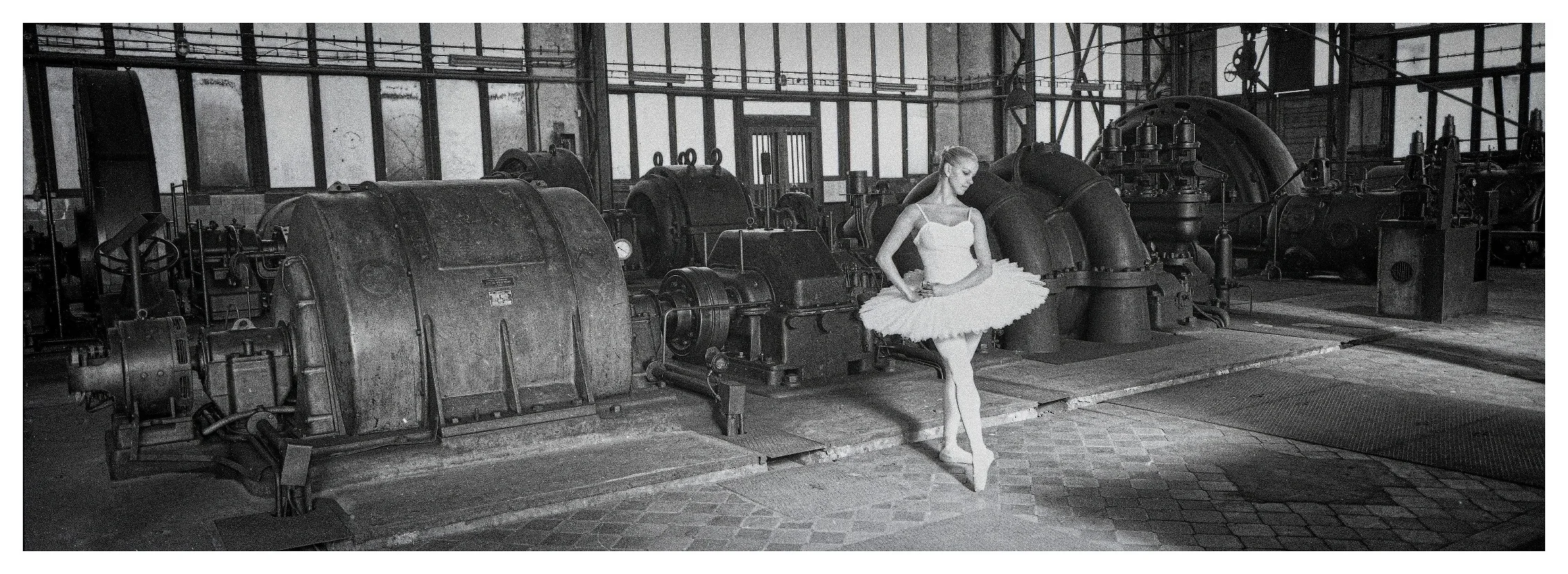
2007 marked the beginning of my photographic journey and search. I experimented with different cameras and styles, but I was most drawn to classic analogue black-and-white photography – in all its forms, including bromoil and large photographic formats. Over time, I began working with a medium-format 6×7 cm film camera, which gave me the right balance between quality and practicality. From the very beginning, I knew the digital path was not for me; I enjoyed working with film and the darkroom. Yet for a long time, I searched for a subject that would stay with me, one that would hold meaning over the years.
INSPIRATION FROM EDGAR DEGAS
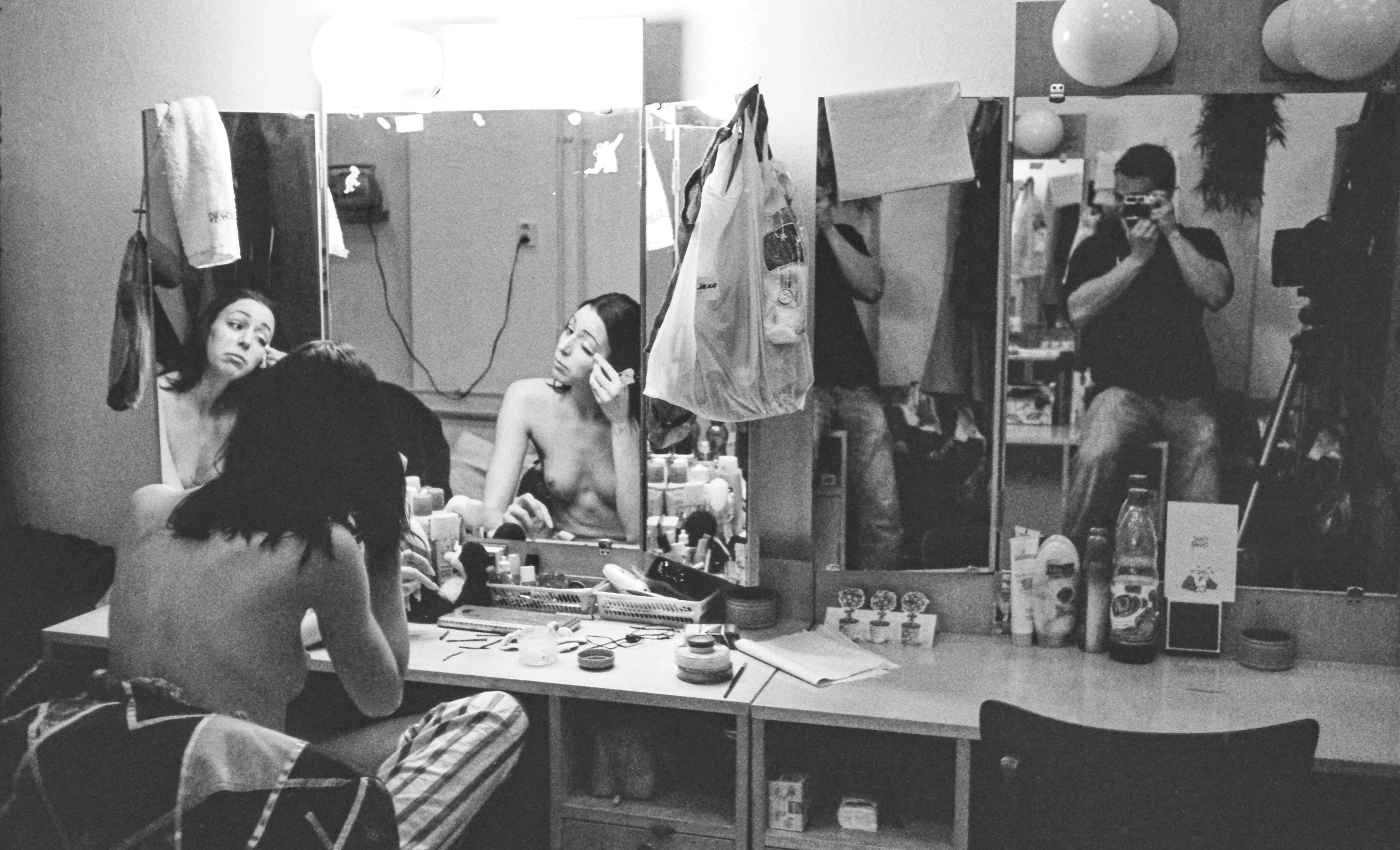
A turning point came when I discovered the works of Edgar Degas. I was most captivated by his paintings and drawings of dancers in the backstage of the ballet – not in grand performances on stage, but in ordinary moments: adjusting their costumes, resting, or waiting. These small scenes felt natural, human, and timeless. The subtle shades of white and gray, the delicate details of ballet costumes, seemed as if they were created to be captured through classic black-and-white photography. In this, I found the subject that truly spoke to me – ballet and the backstage life of ballerinas.
SEARCHING FOR MY OWN ARTISTIC STYLE
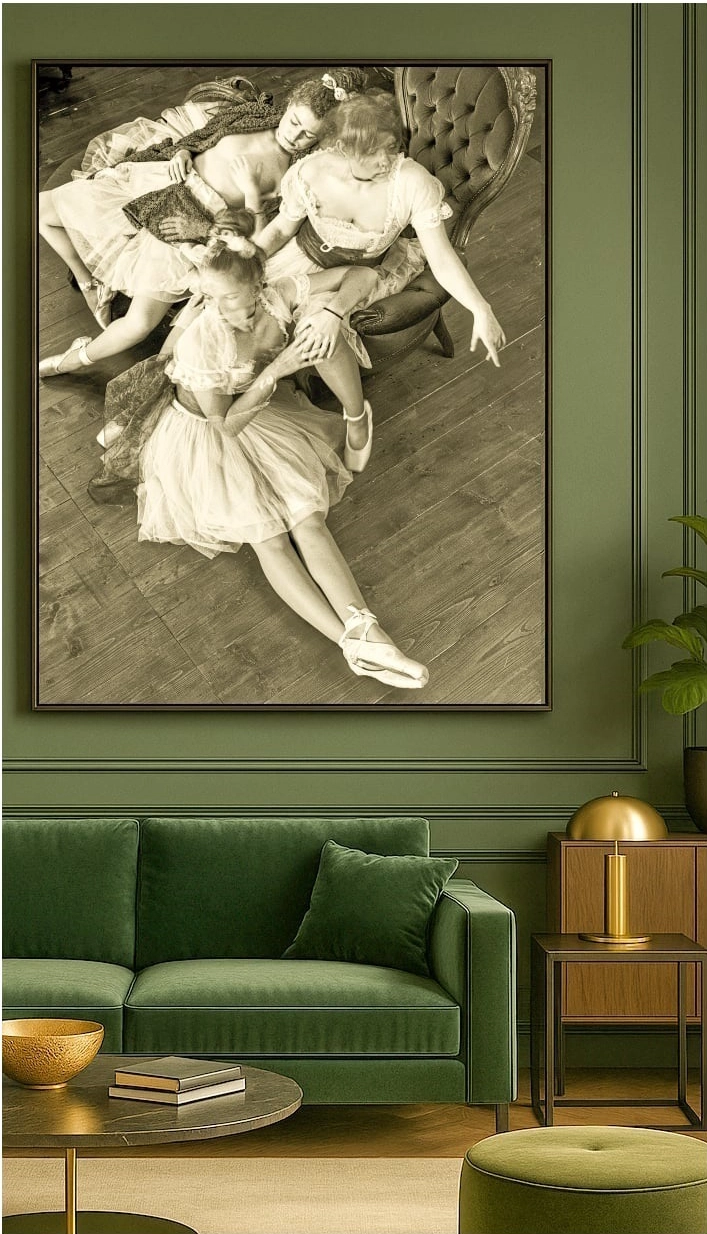
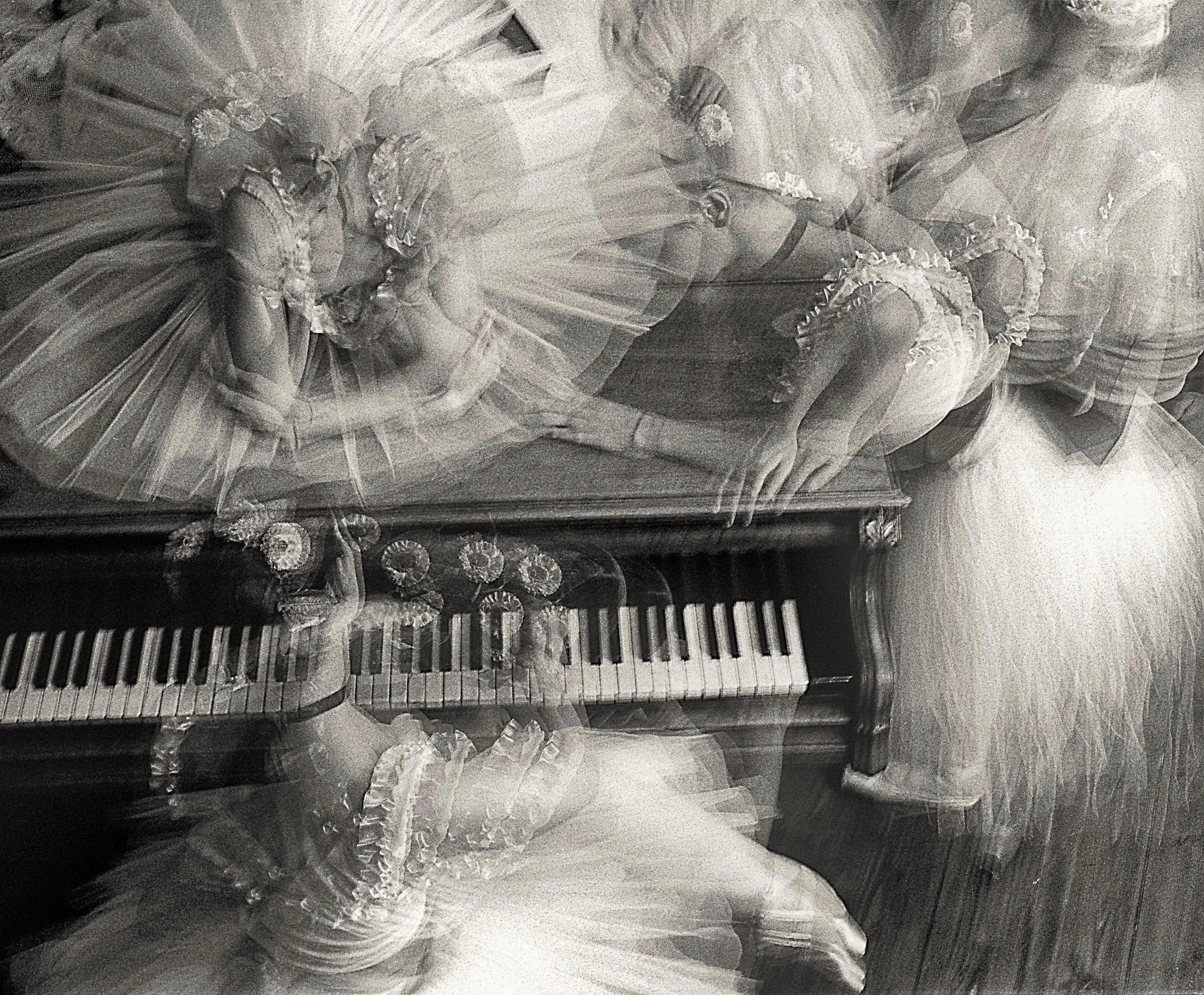
I soon realized that what appeared natural and effortless in Degas’s paintings did not translate the same way into ballet photography. That is why I began searching for my own way to capture the ballet theme and transfer it onto the photographic negative. I thought of incorporating movement into the images, much like Miloslav Stibor did in his black-and-white photographs of dancing models, and I also drew inspiration from Marcel Duchamp and his Nude Descending a Staircase. From them, I adopted the idea of working with motion and multidimensionality. I began to use long exposure times and multiple flashes. During the exposure, the ballerinas perform simple actions – putting on pointe shoes, adjusting a tutu, fixing their hair, stretching, or resting. These small gestures bring a naturalness and ease to the photographs
THE PATH TO A DISTINCTIVE PHOTOGRAPHIC STYLE
It took nearly twenty years before I arrived at what I now consider to be my own style. It was a period of experiments, mistakes, and constant searching. I had to test how long an exposure should be, what settings to use, how much movement was too little, and how much was already too much. It may seem simple – to load a film, set a long exposure, and just take the picture. Yet this is deceptive, just like the seeming lightness of ballet. Nothing is further from the truth than the smile of a ballerina.
Today, I work in my own photographic studio, which I have furnished to reflect the atmosphere of late 19th-century ballet halls. I photograph exclusively on classic fine-grain black-and-white film, continuing to use long exposures and light to shape the image. I most often photograph ballerinas from above, which offers an unusual perspective on the ballet scene. The first deliberately captured ballerinas with long exposure I made in 2020, and the very first photograph turned out perfectly. At that moment, I knew I had “found it.”
ANALOGUE PHOTOGRAPHY AND PRINTING
I develop the films myself and enlarge baryta prints in my own darkroom. I consider baryta paper to be the classic medium of black-and-white photography, and I give it preference when I want to create a true collector’s original. For larger pigment prints, I scan the negatives. However, I never digitally manipulate the image – I only make basic corrections. Every detail in the photograph was truly present at the moment of exposure.
This is essential for me – that it remains authentic analogue photography, without additional manipulation and without artificial intelligence.
FINE ART PHOTOGRAPHY FOR THE ATTENTIVE VIEWER
My ballet photographs are not created for quick consumption, nor for algorithms. They require time, focus, and calm. They are not meant to overwhelm at first glance. One needs to return to them, to look closely and search for details that may remain hidden at a fleeting glance.
This is the approach I value – calm photography that gives space for concentration.